Wednesday, August 29, 2012

Eastern comfort.

Various good birding spots on the east coast.


Coastal Hualien. (swimming only safe in certain locations)
This is not an exhaustive list of good birding sites - just some I have had the pleasure of exploring recently. Some easily accessed with public transport, some much more difficult! From north to south along Highway #9 ('rift-valley') usually. Links to Google maps.

Tsuochang Forest Trail.
Just outside Hualien City (see nearby Taroko), complements visits to the Hualien rivermouth and Fenglin (Maple) Trail. Starting next to a pleasant stream, the surfaced pedestrian-only zigzags steeply uphill. From downtown Hualien, take Jhongshan Road to the very end, turn right, then second left.

Liyu (Carp) Lake.
As well as having lots of tourism-orientated facilities nearby, the trail around the lake, and the Baibao Stream just to the west of Pinghe train station can have very good birds.

Fataian (Fataian) Wetlands.
A very pleasant family oriented wetland area not far from Guangfu Town. An easy way of exploring every element of wetland ecology.

Fuyuan Forest Rec. Area.
A very pleasant forest area, superb for low-mid elevation birds, reptiles, and butterflies. Excellent (but very expensive, and maybe overdeveloped now) resort facilites.

Walami Trail.
Even if not ready for the 2-11-day hikes starting here over the Batongguan Trail, it is worth hiking an hour or two of this great trail starting from Nanan (in turn near Yuli). Great forest, views and suspension bridges.

Wulu Forest Road.
This excellent birding forest road starts not far from the Big Chief Hotel on Southern Cross-Island Highway (#20, not passable at highest points). Also great mothing and butterflies along the public road/fort/steep path starting from across suspension bridge.

Lijia Forest Road.
The first [just about] drivable 15 km are rubbish due to extensive betel-nut and ginger farming. After clambering over a closed gate the mid-elevation birding is great.

Zhiben (Jhihben) Forest Road
Before entering the main hot-spring hotel area this forest road starts from %%% Hotel on the right. Excellent.

Zhiben Yaoshan Road.
Follow the signs in the main part of Zhiben to this road that takes you high up. Great at raptor migration time. Of course don't let the hot-spring hotel zone ugliness put you off visiting the still good Jhihben Forest Area.

Taidung Coastal Area.
A rough-looking, but sometimes bird-rich, coastal area just south of Taidung City.

Shuangliou Forest Recreation Area
Closed for a couple years after Typhoon Morakot now open again (hope Tembin does not reverse that tonight!!!). A good foresty area on the part of Highway #9 that crosses the Taiwan East-West.

Hehuan - flowers too.

Birds - and flowers

Hiding at home between Typhoons Saola and Tembin right now - this summer has not been the best for traveling in remoter parts of Taiwan. Autumn is around the corner and usually brings more settled weather - and migrating/wintering birds! Gives me time to record the birds - and some of the flowers - observed on 3 trips over Hehuan Mountain early August. Hehuan is in the center of Taiwan, and is the highest drivable pass in Taiwan.

Hehuan area. Qilai Mountain & Songxue Lodge visible.
These top species were found starting from the parking lot in front of the old Hehuan Hostel; on the access road to the Huaxue Shanjuang (Ski lodge) - which starts between to the toilet block and the entrance to Songxue Lodge; and about 1km along the trail to Little Qilai Mountain. A typical result in reasonable conditions.

Species (and location): Alpine Accentor (on the parking lot, between tourist’s feet); Winter Wren (below the toilet block); White-whiskered Laughingthrush; Taiwan Bush-warbler (in Yushan Cane below Songxue Lodge); Yellow-bellied Bush-warbler (in pine trees below road); Vinaceous Rosefinch (in carpark, around old hostel), Taiwan Flamecrest (in pines on hiking trail where it starts eroding away); Grey-headed Bullfinch (same location as Flamecrest); Brownish-flanked Bush-warbler (in short Yushan cane next to hiking trail); Collared Bush-robin (on wall in front of Ski Lodge); Green-backed Tit (similar to Flamecrest); Coal Tit (on route to Little Qilai).

And a few of the many plants in flower: Codonopsis kawakamii, Gnaphalium japonicum, Aletris formosana, Veratrum formosanum, Polygala japonica, Adenophora morrison, Yushan Pink Dianthus pygmaeus, Pearly Everlasting Anaphalis morrisonicola and other Anaphalis species, Artemisia morrisonensis, Solidago virga-aurea var leiocarpa, Morrisona Sedum Sedum morrisonense, Scabiosa lacerifolia,Hypericum nagasawai, Formosan Majoram Origanum vulhare var formosanum, Milkwort, Japanese Knotweed, Formosan Buttercup, Glandular Rose Rosa transmorrisonensis, Spiraea hayatana, Formosan Senecio, Alishan Gentian, Taiwan Gentian Gentiana atkinsonii var formosana, Dark Spot Gentian, Swertia tozanensis, Hohuan Willowherb. A proper survey (and knowledgeable botanists with more time) will find dozens more - many unique to this habitat.

Flora Tours.

I’m putting together the details of the 2014 Taiwan botany tours. Birds (and insects) will take a supporting role as we focus on the fantastic range of endemic orchids, gentians, asters, lilies and geraniums. We will spend most of our time in alpine areas taking a healthy interest in flowers, some of Taiwan’s many species of ferns, as well as the stunning scenery .

The flora of Taiwan is closely related to the floras of southern China and the South-east Asia. Taiwan has almost 190 plant families, about 1,200 genera, and more than 4,000 native species (700 of which are ferns!). Thanks to our diverse island geography and climate, endemic plants represent an estimated one third of the total.

Wednesday, August 1, 2012

Hualien - coast and hills.

I had a chance to revisit two good birding locations near Hualien - the city closest to unmissable Taroko Gorge. Previous observations regarding Taroko here and here.

Hualien River Mouth.
This time I spent an hour, late morning, on the northwest side (on the city side) of the river, see here for the other side. For a well rounded day’s birding, try to combine this location, with good views of sandbars, with observations from the other (southeast) side of the river mouth - and then follow #193 south for a few km.

Possible to access by car, but probably easier to explore by bicycle along on the excellent bike path. If driving or on motorcycle, from Nanbing Road (aka #193, city side of the big bridge) take Huazhong Road to the east end. 

List of what I remember: Various egrets (ignored details...); Mallard Duck (introduced); 20+ Eastern Spot-billed Duck; 20+ Kentish Plover; Common Moorhen; Skylark; White Wagtail; Plain Prinia; Yellow-bellied Prinia; Golden-headed Cisticola (heard only); Grey-tailed Tattler (distant, unsure); Black Bulbul.

Fenglin (Maple) Trail.

This (楓林步道) is probably the best forest birding site close to Hualien City, (see also Tsuochang). With only an hour available on a hot July lunchtime I was still able to get nice views of a few superb birds: Red Oriole (usually fairly reliabe here); Black-naped Monarch; White-bellied Erponis; Besra. Another very large raptor was kicking around.

Fenglin start marked on left. Hualien downtown top-right.
Other sought after birds often reported here: Black-necklaced Scimitar Babbler; Taiwan Scimitar Babbler; Grey-throated Minivets; Taiwan Barbet; Grey-capped Woodpecker; Bronzed Drongo; Bamboo Partridge. In winter Grey-cheeked Fulvetta and Sibia can be present. Good for butterflies too.

Great views over the city. Technically part of the suburb of Hualian City - Ji-an. To get there is fairly easy - find and follow Fuxing Road to the end. Sporadic bilingual signs for Fenglin/Maple/Maplegrove. Google map here. A good variety of native vegetation alongside the weaving 3.5km driveable road.

As usual I stayed in our Taroko Lodge. In the grounds, or very close by, there were: Bamboo Partridge (heard only); Common Pheasant; Black Drongo; Japanese White-eyes; Hwamei (heard only); Gray Treepie; Long-tailed Shrike; Chestnut Munia; White-rumped Munia; Myna; Tree Sparrow; Taiwan (Styan’s) Bulbul; Spotted-necked Dove; Taiwan Barbet (heard only).

I found Black-spectacled Toad and Olive Frog in the nice pond on the grounds. Previously I think I’ve identified correctly Ornate Narrow-mouthed Toad, Latouche’s Frog and Chinese Tree Toad.

Dragonflies: Brachydiplax chalybea, Anax panybeus, Ceriagrion latericium, Butterflies er...another time!

Tuesday, July 31, 2012

Terns and tunnels


Chinbi Village, Beigan. Gaodeng on horizon.
 China visible behind setting sun.
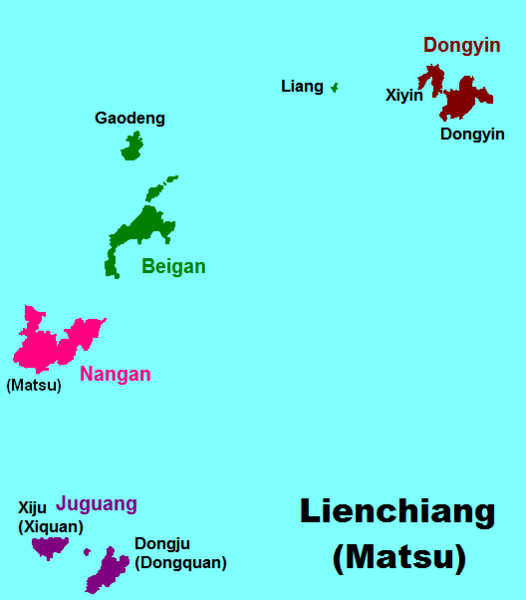
For me gulls and terns can be one of those ‘difficult’ families. So it was good to have a birding trip with more time to focus on these surprisingly interesting birds. With a group from Taipei Wild Bird Society I toured the Matsu islands of Dongyin, Nangan and Beigan. It was well organized and fun, with opportunities for some quality normal tourist stuff. I will be back there for fall migration - join me, it promises to be heaving with birds. Help keep the rotten casino idea off the books.

Birds seen:
Small numbers (usually individuals) of: egrets (Great, Intermediate, Little, Cattle);  Grey Heron; Pacific Reef-heron; Black-crowned Night-heron; doves (Spotted-neck, Red Collared); Fork-tailed Swift; Blue Whistling Thrush (the Chinese one, not the Taiwan endemic); Blue Rock-thrush; Japanese White-eye; Oriental Greenfinch, House Swift, Greater Coucal, Long-tailed Shrike; Oriental Magpie Robin. More numerous were Tree Sparrow; Chinese Bulbul; Barn Swallow; Myna species. Brownish-flanked Bush-warbler heard only.

Boating around Dongyin.
Black-tailed Gulls were numerous (and very up-close visible) at the fantastic Andong Tunnel - not often a birding site is down an enormous tunnel complex. Abundant Bridled Tern around Dongyin, and islands near Beigan. Smaller numbers of Roseate Tern, Black-naped Tern. Great Crested Tern, Whiskered Tern.

The critically endangered Chinese Crested Terns were seen by other birders (not by us...) on Xieshien. Their Taiwanese breeding grounds seem to be well studied, and protected from human harassment nowadays. Enforced stiff fines, instead of jail, apparently works better with Chinese fishermen.

On the ferry from Donyin to Nangan: Bulwers Petrel; Streaked Shearwater (another identification dependent on Robin Zhang 張瑞麟 from TWBS - thanks!); Kentish Plover; Little Ringed Plover; Common Sandpiper; Red-necked Phalarope (around 6). Pleased to get the Phalarope so clearly - have been tricky in the past.

File:Lienchiangadm.PNG
Matsu: not to scale - Dongyin and Juguang further from other
two main islands.
The Matsu (馬祖 Matzu, officialy Lienchiang County) Islands are a group of Taiwan-controlled Islands 10km from the Chinese coast NW of Taiwan. The two main islands are Nankan (南竿) and Beigan (北竿 Peikan). It is possible to fly to Beigan and Nangan from Taipei (Domestic, Songshan) Airport with Uni-air. Regular small ferries all day between Beigan and Nangan, fewer to Donyin (東引) (best by Taima Ferry on route to/from Keelung) and the somewhat remoter Jyuguang (莒光). Lots of interesting sights - the most bunker-laden place in the world, quiet villages - and the civilizing presence of 7-11 stores!


I’ve started writing up some notes on good birding sites (especially at migration time) on the Matsu Islands. Tired. For now, I suggest birders scoot around a variety of places on the islands. Look out at areas of forest scrub near the small reservoirs, and the vegetable gardens near several of the villages.

NT$ 500,000 - a good start!


New birds:
Roseate Tern    Sterna dougallii  
Red-necked Phalarope    Phalaropus lobatus

Friday, June 15, 2012

Hsinchu and Changhua Coast.

No Yuhinas for a couple weeks...
This will be the last post for a few weeks. We are now in the wet season, and I will be back in the UK for a couple weeks. I'm looking forward to the exotic Blue Tits, Chaffinches, Blackcaps, Robins, and Dunnocks of sunny County Fermanagh.

Last week, before meeting clients for some very wet endemic hunting, I had a chance to further explore a couple coastal areas in central-west Taiwan. These were Hambao and Wangong Harbor in Changhua County, and the Keya river mouth/Jincheng Pond area in Hsinchu City. Both of these places are at their best in winter (and fall/spring).

Changhua coastal birding. SW of Lugang and Taichung.
Being a very hot June day I saw little worth recording at Hambao etc - in winter it is usually excellent. Last week the sun and heat was too much for me and the birds - a Common Tern (new) being near Wanggong Harbor and flying Ibis being were all I had the energy to record. Not a fair reflection of this area - I recommend birders visit (Hambao, Xinbao, Fubao, Wanggong) in season!

A damp, freshly plowed field near Jincheng Pond, Hsinchu, was very good, it held: Spot-billed Duck, Black-winged Stilt, Eurasian Magpie, Greater Painted-snipe, Whimbrel, Kentish (Snowy) Plover, Oriental Skylark, Yellow-bellied Prinia, Long-tailed Shrike. A Pin-tailed Snipe loitered at very close range, undisturbed by my efforts at falling into ditches. Also on the pond (or small ‘Lake’?) and in the nearby mangroves I spotted: Common Kingfisher, Black-crowned Night-heron, Black-winged Stilt, Common Moorhen, various egrets (Little, Cattle, Intermediate, no Chinese sadly).

Hsinchu - east of city proper.
If interested in shorebirds, Hanbao and Fubao (in addition to Gaomei Wetlands) are good destinations for residents of Greater Taichung City in central-west Taiwan. If wanting forest or mountain birds - Dasyueshan! The Hanbao/Fubao/Xinbao areas are west of #17 south west of the historic town of Lugang. Honestly not the most scenic place in Taiwan. Best advice is to roam around until finding a good spot. Hides provided near Wanggong Harbor give good views over the sandbars. Weatherproof hides at Fubao.

The Keya river mouth/Jincheng Pond area is a convenient and very pleasant escape from Hsinchu City (a couple hours south of Taipei and famous for its high tech industry). The area is well signposted - Jincheng Lake Birdwatching Zone (金城湖賞鳥區), west of the southern end of Hsinchu Airport. If possible visit the area by bicycle, the 17 km coastal bicycle trail is excellent and passes great birding areas otherwise inaccessible to cars or motorcycles.

If in Hsinchu, and wanting forest or mountain birds, and not wanting to explore Dasyueshan, then travel southeast from Hsinchu City to Guanwu or Smangus.

New Birds
Common Tern    Sterna hirundo
Pechora Pipit    Anthus gustavi      (In Anping on June 4th)
Pin-tailed Snipe    Gallinago stenura

Taiwan Birdathon

Taiwan Birdathon range (approx!)
Taiwan is holding a 30-hour Birdathon event on November 24-25th 2012 (8:30 am - 2:30 pm).

It will be held in the southern counties of Yunlin, Chaiyi, and Tainan - home to great birding sites such as Alishan, Yushan National Park, Huben, Beimen Wetlands, Aogu Wetlands, and Qigu Reserve. A wide range of shore and forest birds can be expected - including many endemics and wintering specialities.

This will be a fun event suitable for bird watchers of all abilities. Teams, each consisting of 3-4 members, aim to spot as many bird species as possible in the 30 hour period. There may be other less competitive 'targets'. Foreign teams are especially welcome - accommodation and food will be paid for on the 23-25th, and can be paired up with local guides if necessary. No registration fee required.

Organized by the Taiwan Ecotourism Association. Sponsored by Taiwan Tourism Bureau, and the SW Coast Scenic Area Administration, Alishan NSA, and Siraya NSA. 

The (still evolving) official website is at http://www.taiwanbirdathon.org

For registration, contact always on-the-ball Victor Yu at yuvictor56@msn.com or eco.tourism@msa.hinet.net

To do well in this event, you should aim to explore as many different habitats (coastal wetlands, farmland, low to mid-elevation forest, high-elevation areas) as possible within the available timeframe. Personal transport (car, motor scooter) should be deemed essential. 
Google map link.

I'm not sure yet where the official focal point for the event will be - most central would be Chaiyi, but I will not be surprised if it is Douliou or Tainan. I would plan on being in mid-elevation Alishan on the 24th night. For a sense of scale - to travel by car from Tatajia in Yushan Nat. Park (the likeliest highest, and easterly point) to Aogu Wetlands on the west coast, would take about 3.5 hours. The north - south extremes are mostly within 1 hour's travel.

I will round out this page with more information and tips in the next weeks and months.

3,000 meters, 3 meters, and 300 meters
Will be running pre- and post- Birdathon tours to other birding areas. See 2012 trips here.

Tuesday, May 22, 2012

Tainan - north and east.

Beimen, Tainan.
May 17
Hen Harrier. Image

Several days of grey skies and showers - it didn’t look promising, but for my sanity I had to get out of the office. Was well worth getting soaked for, some good birds found, suspect many more were hiding. The main focus of my escape was Shuangchun (not far from Beimen in northern Tainan County) - the pedestrian path area inside, and the roads on the west side.

Birds seen in and around Shuangcun, Beimen:

Moorhen, several Redshank, Long-tailed Shrike, Chinese Bulbul, Black Drongo, Magpie Robin, Swallow sp, Kentish (Snowy) Plover, Yellow Bittern, Various Egrets, Black-naped Night-Heron, Little Grebe, Greenshank, Black-winged Stilt, Sooty Tern, Hair-crested Drongo, Whimbrel.

Also, on the way north on #61, where it meets #173 (not far from the Black-faced Spoonbill reserve), I came upon a pond with mixed group of Whiskered and Black-winged Terns.

On the northern side of the Tsengwen river mouth, south of the BFS reserve,  there was stunning Hen (Northern) Harrier. Near the #17 bridge was a Koel.

Near HSR Station May 11th

Between tedious trips to Tainan High Speed Rail (HSR) Station had time to look around some fields and scrub to the east of the station. A drainage ditch about 1km east held what I am pretty sure was an  Japanese Night-Heron, makes me wonder how many of these endangered migratory birds are mistaken for Malayan Night-Herons (also top finds).

Sicao Tainan May 22nd

Slaty-breasted Rail on the way to coastal windbreak forest. Part of Taijiang Nat Park.  

New birds.

Sooty Tern    Onychoprion fuscatus
White-winged Tern    Chlidonias leucopterus
Northern Harrier    Circus cyaneus
Asian Koel    Eudynamys scolopaceus
Japanese Night-Heron    Gorsachius goisagi
Slaty-breasted Rail    Gallirallus striatus    Taiwan Endemic Subspecies (G. s. taiwanus)

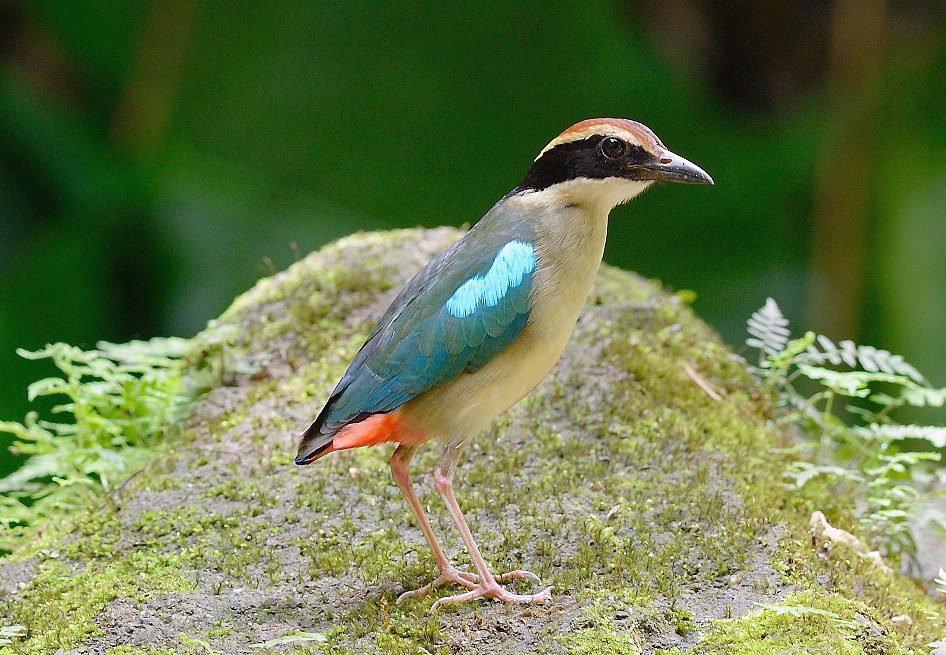
Fairy Pitta!

Fairy Pitta!

16th May

Jhonglun Mountain. Do I need say anything else?

Fairy Pitta.  Image

Fairy Pitta    Pitta nympha

Lanyu (Orchid Island)

Lanyu
May 14th

Jap. Paradise-Flycatcher
Just back from Lanyu (蘭嶼, Orchid Island) where all the target birds were bagged in record time. Bonuses - excellent weather, fun snorkeling, other good birds (and flying fish, dolphins) on the ferry. A rugged mountainous island sitting 90 km off the southeastern coast of Taiwan. Its flora and fauna, tropical climate and culture at times feels more Filipino than Taiwanese.

As soon as getting off the ferry, and renting a scooter with stunning ease, I headed straight for ‘Flycatcher Creek’. All target birds were found in record time (not always this easy). The local race of Brown-Eared Bulbuls were abundant island-wide, 3 or 4 Japanese Paradise-Flycatchers were seen only in the creek, Philippine Cuckoo Doves were in the creek and elsewhere, Lowland White-eyes were everywhere. The Whistling Green Pigeon made an appearance from the bridge. 

While in the creek, careful listening and a bit of mimicry attracted a Scops Owl that sat for over 5 minutes in excellent light. The endemic botelensis form on Lanyu has historically been lumped in Ryukyu Scops Owl Otus elegans, but it has now been shown to differ morphologically and vocally from the birds in the Ryukyu Islands and is often treated as specifically distinct as (Elegant) Lanyu Scops-Owl.


Also seen on Lanyu.
White-breasted Waterhen, 1 Water Rail, 3 Grey Herons,
Egrets Little and Intermediate.
4 dark morph Reef Herons
10+  Blue Rock-Thrush of the philippensis variety - stunning powdery blue.
10+ Brown Shrike, House Swift maybe other? Pacific Swallow.
Oriental Pratincole - first this year!
Black Drongo, Yellow Wagtail species.

And on the ferry.
1 Bulwer’s Petrel
5+ Little Tern
1 Short-tailed Shearwater. other distant birds.
All were seen close to the most southerly point of Taiwan. The sea was very calm.

Lanyu coast from the lighthouse road.
The main problem birders encounter with Lanyu is transportation to and from the island. Especially in summer and winter, bad weather can mess with flights and ferries for days on end. In summer Lanyu can become quite busy with holidaying students.

Flying: Daily Air ( 07 8014711, 089362489, 089362487, 089362485, Taidung Airport 362675-6, Lanyu 089732278 http://www.dailyair.com.tw/) web have 12 flights daily from Taidung Airport. The small airstrip on Lanyu means the planes are 19-seaters. NT$ 1,300, 20 minutes.

Boat: Ferries run year round from Fugang (富岡, just north of Taidung city); and in summer (April to October) from Hobihu (後壁湖, not far far from Kenting). NT$ 1,000, 2.5 hours.
The main ferry companies are Dafa 金星(大發)輪船公司 089-281477  or (089)281490 http://dafa.okgo.tw/ (Hobihu and Fugang),  興安輪船公司 (Kaishiuan or Farnlin?) 089-281047 http://www.farnlin.com.tw/. and Green Island Star  綠島之星輪船公司 089-280226. Good luck.

For most birders a 1-night stay is adequate. Stay longer if planning diving or insurance against bad birding weather. Accommodation and food on Lanyu is adequate but certainly not 5-star. I suggest staying at one of the small guest houses away from the scruffy main village of Hongtou.

It is easy [update May 2013: may not be so easy now - at minimum you should have an international licence] to turn up at the airport or harbor and rent motor scooters. Cars also available. Contact me if needing help booking any of these items in advance - no guarantees, but will help.

New Birds.

Oriental Pratincole    Glareola maldivarum
Bulwer's Petrel    Bulweria bulwerii
Little Tern    Sternula albifrons
Short-tailed Shearwater    Puffinus tenuirostris
Lowland White-eye    Zosterops meyeni
Ryukyu Scops-Owl    Otus elegans    "Endemic subspecies (O. e. botelensis)"
Whistling Green-Pigeon    Treron formosae    "Endemic subspecies (T. f. formosae)"
Philippine Cuckoo-Dove    Macropygia tenuirostris
Brown-eared Bulbul    Ixos amaurotis    "Taiwan Endemic Subspecies (I. a. harterti)"
Japanese Paradise-Flycatcher    Terpsiphone atrocaudata   

Kenting

Kenting
May 13th and 15th

Collared Finchbill
Kenting is the common name for the (usually tropical) Hengchun Peninsula in the very south of Taiwan. Most people visiting Kenting are there only for the beaches, and the main town of Kenting - whose main street becomes a night market most nights. If not into this sort of thing, don’t worry - it is easy to escape on your scooter into the REAL parts of the national park.

The best places for birding in Kenting (more details soon):

Longluan Lake. The excellent visitor center on the west side is equipped with scopes. In the parking lot look out for the endemic Taiwan Hwamei.

During fall raptor migration season Sheding Park near the Forest Park - on the hill behind Kenting Town.

The Manjhou area in the middle of the peninsula is also excellent for resting raptors. At dawn and dusk scout out the area between the ‘raptor bridge’ in Manjhou and the coast at Gangkou.

Try to plan ahead and get permits for Longkeng Eco Area. If not possible, then explore the area next-door at the southernmost point of Taiwan. The scrub can be hold good species - as well as sea-viewing.

Also very worth getting the necessary permits for is the hiking trail leading to the lake in Nanren Shan (Mountain) Ecological Protected Area. Fantastic biodiversity. NE part of the national park.

I’m not very familiar with it, but some people recommend the west side between Guanshan and the national aquarium.

On this visit I only had time to briefly check Longluan Lake and the Southern Point. Some birds seen - highlights, not a complete list.

Pleske’s Warbler - brief views in scrub near Southern Point. Had been tipped off, needed audio to confirm!
Glossy Starling (established escapee, but not common here so nice to see...for now), Zitting Cisticola, Spot-billed Duck, Oriental Skylark, Ruddy-breasted Crake, Taiwan Bulbul, Oriental Reed-Warbler and Scaly-breasted Munia, Collared Finchbill, Hwamei, Black-naped Monarch.
Three Wedge-tailed Shearwaters from the Southern Point.
About five Brown Bobby on rocky shore near Fonggang Town 30 mins north of Kenting.

New Birds.

Wedge-tailed Shearwater    Puffinus pacificus
Brown Booby    Sula leucogaster
Pleske's Warbler    Locustella pleskei
Asian Glossy Starling    Aplonis panayensis