Showing posts with label Taiwan Birding. Show all posts

Monday, October 27, 2014

The new Taiwan Bird Field Guide

First Edition. See my review of the second edition of this book.

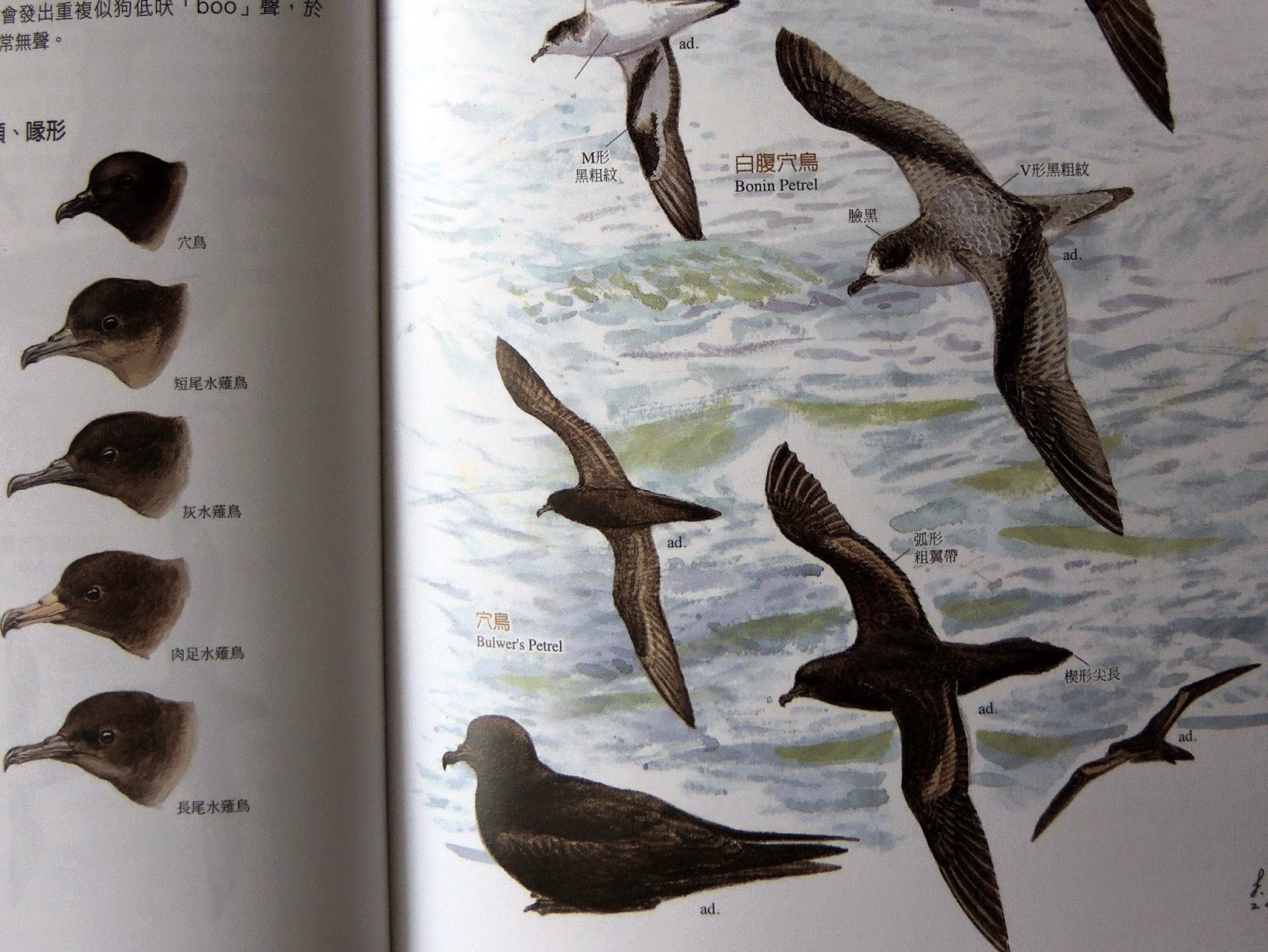
The new field guide (in Chinese) for Taiwan birds has just been published. Confident it will be the default guide for any birder here. See details below for purchasing.
 
Years in the making, sample books were available for inspection at the Taipei Birdfair this past weekend, actual delivery only starts November 7th.  Photos taken with cell-phone - and authors' permission. First impressions:


First thing to emphasize is that the main text is in Chinese (remember 99% of birding done here is by local birders). As well as the painted plates, non-Chinese readers can make use of highlighted key marks and size indicators. Each species and variant is labeled in English. Some foreign birders may still wish to supplement it with Mark Brazil's The Birds of East Asia, Liao Bensing’s rather good photographic books, and the latest checklist. Without having much time to carefully study/use it yet, the artwork seems very good and of a standard meeting, or exceeding, that of international publishers. No other book illustrates the endemics and relevant endemic/resident/visiting subspecies better. Well done to all involved in producing this!


The only fault I found is the clumsy English title - thankfully the focus was on the internal content! Range maps of little use.


Comprehensive coverage of main island and offshore islands (Matsu, Lanyu, Kinmen etc).
637 birds fully illustrated, with another 11 escapees in a condensed double plate.
Satisfactory combined scientific/English name index.
Published by Taipei Wild Bird Society with the Forestry Bureau. ISBN 9789860425550
Field Guide of Wild Bird in Taiwan [sic] Mu-Chi Hsiao (main author), Cheng-Lin Li (artist).
Large pocket size, 680 grams (foreign birders may wish to remove pages in Chinese introducing bird families, taxonomy etc).
Well bound, printed on quality paper etc. Flexible cover, 451 pages.


It is available from Taipei Bird Society and other bird societies for around NT$ 1,200. I am happy to mail it directly worldwide. UK, US, AUS etc US$ 58 (or UK£37); east Asia (Sing, Japan, HK etc) US$ 49. This includes packing, airmail postage (expect arrival within 1 week to the UK), and a useful map of the country. Send payment to PayPal account sinoflump@hotmail.com including your correct address.

To make this book more useful for foreign birders - in a month or so I will prepare a supplement translating key text to tricky species etc. Suggestions welcome.


Friday, November 29, 2013

Taipei Airport Birding tips.

Taipei Airport Stopover Birding.
 
This document can also be downloaded in other formats here.


This short guide is for birders with a couple hours to spare near Taipei International Airport.
The international airport (a.k.a. CKS, Chiang Kai Shek, Taiwan Taoyuan Airport, 桃園國際機場) is at least 40 minutes from downtown Taipei City - if going there see the locations (Botanical Garden, Huajiang Nature Park etc) suggested elsewhere on the blog for some pretty decent birding. An alternative is to visit some heavily disturbed scrubby coastal wetland and farmland about 15-20 minutes drive from the airport - described below.


Customs, immigration and security are usually fairly quick and efficient on entry and exit. Most passport holders do not need a visa to enter Taiwan - of course check. See the map and appropriate language to use with a taxi driver (most will have no idea why anyone would want to visit this place). You may want to also download this document titled Chinese for Birders, containing other useful language. Bring your scope for waders, otherwise regular clothing and footwear is fine.


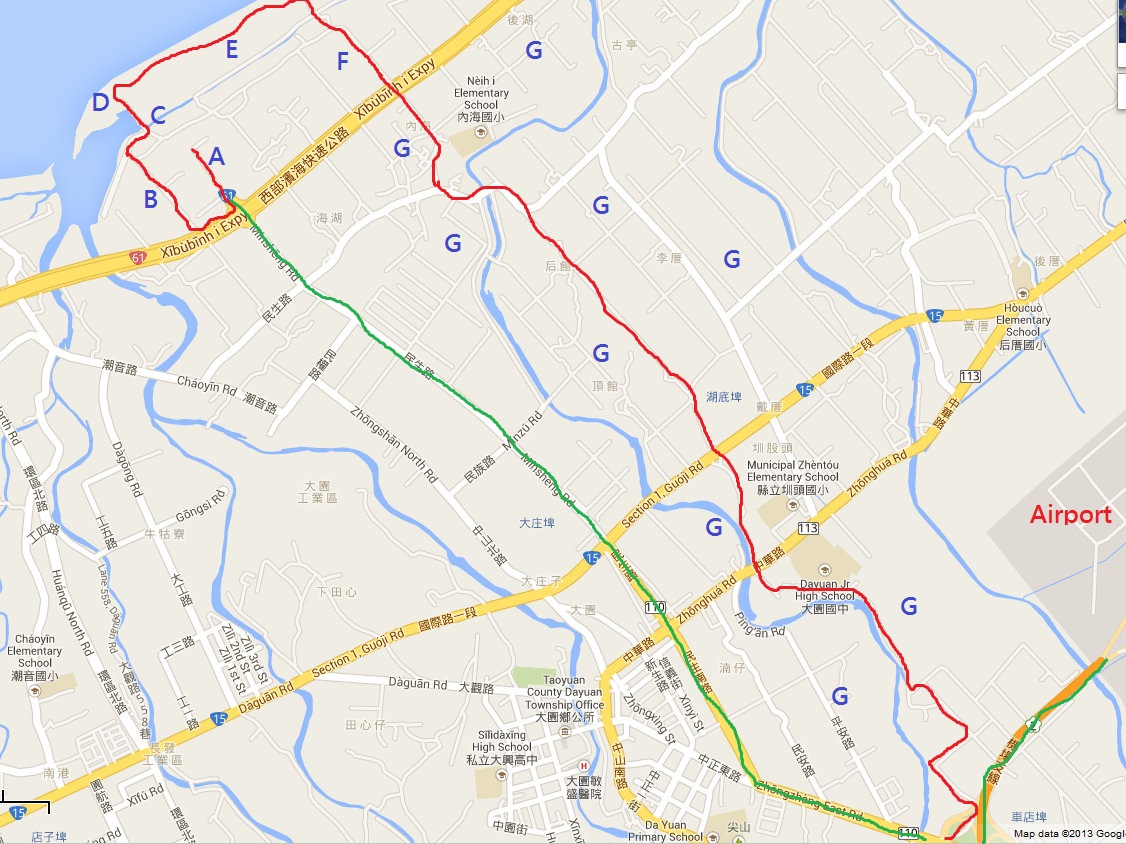
The place I’m recommending for some reasonable self-guided birding is near the coast to the northwest of the airport. It has some sandy coast, a rivermouth, intertidal estuary area, sandbanks, wind-protection forest, marsh, ponds and small-scale agricultural fields. Some of it is a recognised (but fought over) Important Bird Area (IBA-TW006). Please note: most of Taiwan is scenically beautiful and clean, this area is not. It is near important industry (manufacturing and transport-related) and has went through various phases of not very environmentally sensitive development. Please focus on the birds, not the views. Come again for the rugged mountains and pristine forests!


Birds that can usually be expected:


Tree Sparrow, Little Egret, Cattle Egret, Common Myna, Javan (White-vented) Myna, Japanese White-eye, Plain Prinia, Yellow-bellied Prinia, Black-crowned Night Heron, Common Moorhen, Little Grebe, Black Drongo, Grey Heron, Black-winged Stilt, Red Turtle Dove, Spotted Dove, House Swift, Common Kingfisher, Grey-capped Pygmy Woodpecker, Gray Treepie, Common Magpie, Plain Martin, Barn Swallow, Pacific Swallow, Light-vented (Chinese) Bulbul, White-rumped Munia, and Scaly-breasted Munia.


Results will vary widely. The best times are winter (October to March), and spring/fall migration time. The range of potential species is quite large, see the latest Taiwan bird checklist here.


Other birds that are possible especially at migration time and winter:


Large Egret, Intermediate Egret, Chinese Egret (rare), Chinese Pond Heron, Sacred Ibis, Black-winged Kite, White-breasted Waterhen, Brown Shrike , Long-tailed Shrike, Great Cormorant, Common Kestrel, Peregrine Falcon, Osprey, Eastern Marsh Harrier, Black-faced Bunting - and other buntings on migration. Taiwan Scimitar Babbler (may be worth playing call), Taiwan Hwamei (rare, listen for call), Vinous-throated Parrotbill (rare), Black Bulbul, Rufous-crowned Babbler (rare), Oriental Turtle Dove (rare), Fork-tailed Swift, Taiwan Barbet (uncommon, listen for), Black-naped Monarch (rare), Wagtails - Yellow, White & Grey, various transient pipits, Oriental Skylark, Zitting Cisticola, Golden-headed Cisticola (uncommon), Oriental Reed Warbler and other transient warblers, various starlings, Blue Rock Thrush, transient flycatchers, various thrushes (esp winter), Daurian Redstart (winter).


A good range of shorebirds on the Taiwan list are likely or possible: plovers, snipe, sandpipers, stints, curlew, bittern, gulls and terns (low numbers). If very lucky, Black-faced Spoonbill! Some ducks especially Eastern Spot-billed, Green-winged Teal, Gadwall, Eurasian Wigeon, Northern Shoveler, Pintail, Garganey, and Tufted.


Notes:


This area is Tayuan (大園, pronounced ‘da-yuan’), it is not to be confused with the name of the airport, or nearby large city called Taoyuan (tao-yuan).


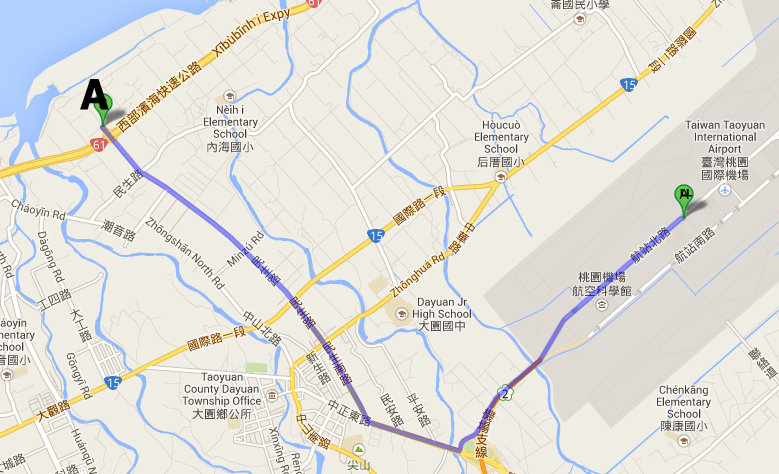
Take taxi, show him suggested route. Pay according to the meter. There are usually no traffic delays on this suggested route (8km/15 minutes from airport to point A). Taiwan taxi drivers are considered dependable - your stuff should be safe, hard to imagine them abandoning you etc! If you have any worries take a note of the licence plate or the driver’s ID displayed inside.


Make a note of the tourist helpline 0800024111 - very helpful in translating or finding information out (they will know nothing about this area though!).


The best source for weather forcasts is Taiwan’s CWB http://www.cwb.gov.tw click on ‘English’ ‘Forecasts’ and ‘Taoyuan County’.


Suggested Route:
Instructions look more complicated than reality. Expect to get slightly lost the second half of the route - not to worry, feel free to explore other lanes and roads.


Firstly drive the busy road to ‘A’ (green or purple line), get out of taxi after going under the raised expressway, and then stroll remainder of dead-end road towards windbreak forest. Scan fields, long grass, scrub and trees.


Return to car and drive very short distance (50 meters?) southwards and take narrow lane (marked as bicycle route) that leads towards the coast. Stop wherever looks promising (B maybe?). (Note some maps may not indicate road passable from A to C).


Turn right at embankment, cross small bridge. Scan estuary and beach from C and D.
Drive along coast (E) scanning sea and windbreak forest.


After coming inland again under the expressway, I suggest following your instincts and being flexible in exploring the area marked with the Gs. Don’t worry if a bit lost, and resorting to pointing at interesting spots.

.

Useful Language.


I want to go here to look at some birds.
我想去這裡賞鳥.
Please follow these directions and map, to an area near the airport.
請按照這些指示和地圖. 我想去的地方就
在機場附近 (大園).
Please study this map first.
請先看看這個地圖.
I need to be back at the this terminal at this... time.
我需要在...(時間)...返回機場.

I need to return to this hotel. (show namecard)
我需要回到在...(時間)...返回飯店

Please charge me by the meter.
照跳錶計價.
I know this is not a nice place, but I don’t have time to go elsewhere.
我知道這個地方不是很漂亮, 但我沒有時間去其他地方.
Don’t worry, I recognise the birds myself.
別擔心, 我自己會認得鳥.
Please drive down these small lanes, if I see anything interesting I will ask you to stop.
先開車這些小路. 如果我看到我想要的,我會告訴你停下來.
OK, I’m ready to go back (to the airport/hotel) now. Thanks.
好了, 現在可以回去機場/酒店. 謝謝.
First go to the place marked ‘A’ on the map (follow the green or purple line). http://goo.gl/maps/jUwfR I will get out and walk around for a few minutes. Then we will drive to B, C, D, E...
先開去地圖上的 ‘A’ (按照綠色或紫色的線). 到 ‘A’ 之後我會下車走一走. 然後我們再開去 B, C, D, E...

Directions. Drive Freeway 2. Exit for Dayuan. Take Minsheng Road (#110). Drive to the end. Do not get on expressway 61. Go under expressway, park here, I will get out and look around.
After this I want to go to B

先上國道二號. 大園下. 開民生路 (#110), 開到底. (不要上國道61). 過高架下, 停在空地.

我會下車走一走.

等一下, 我們再開去 B


Copyright Richard Foster taiwanecotours@gmail.com Please send me feedback.

Wednesday, October 30, 2013

Chinese Language for Birding in Taiwan

I've prepared a document I hope will be useful to those independently birding in Taiwan - a collection of phrases and vocabulary in Chinese related to bird-watching in Taiwan.

Taiwan cops: friendly and helpful in many ways -
sometimes for the latest on Mikado sightings!
It can (I hope) also be downloaded as a Microsoft Word or PDF document here. Tell me what you think.
Chinese Phrases and Glossary for Bird-watching in Taiwan.


Prepared by Richard Foster. TaiwanBirding.com
Version 1.1


This is a selection of Chinese language phrases and terms that may be of use to foreign birders visiting Taiwan - and residents needing some more specific vocab. Note, some of the terminology, and form of characters used in China may vary slightly.


Taiwanese warmly welcome foreign visitors. Many will speak quite reasonable English, others none, or may be very hesitant. Keep in mind good English speakers may not be familiar with birding-specific terms, or the daft needs of us birders! Many of these terms are rather technical - would most average people in bird-watching Britain understand? A bit of patience, sign language, and drawing goes a long way. Speak normally. Romanization is not taught in Taiwan - if possible show Taiwanese actual Chinese characters, not romanized language.


Please note my suggestions are ‘common sense’ translations and may not alway be direct translations. I have romanized (that is - using ‘English’ letters to represent Mandarin Chinese sounds) all the phrases, use them in context and practice. Chinese is not as hard as some would suggest, have a go - you may be surprised!


Common Phrases


English
Chinese
Romanization
Notes
I’ve come to Taiwan to watch birds.
我來台灣看鳥。
Wǒ lái táiwān kàn niǎo.


Bird-watching/birding
賞鳥
Shǎng niǎo
The term more commonly used in China is 觀鳥 Guān niǎo. Also 看 kàn (used above) is common.
I want to see lots of different species of birds, not just lots of the same bird.
我希望看到很多不同種類的鳥類,而不只
是很多隻相同種類的鳥
Wǒ xīwàng kàn dào hěnduō bùtóng zhǒnglèi de niǎolèi, ér bùzhǐ
Shì hěnduō zhī xiāngtóng zhǒnglèi de niǎo
Remember not everyone understands the concept of birding.
I only want to see the birds, not photograph them.
我只希望看到鳥,而不拍照
Wǒ zhǐ xīwàng kàn dào niǎo, ér bùshì pāizhào.
Most birdwatchers here are photographers.
[to] Photograph birds.
拍鳥 or 拍攝
Pāi niǎo, pāishè


I need to get up very early.
我需要很早起床.
Wǒ xūyào hěn zǎo qǐchuáng.


We have this in my home country.
我的家鄉有這種鳥


Wǒ de jiāxiāng yǒu zhè zhǒng niǎo


I’ve seen this bird before.
我看過這種鳥。
Wǒ kànguò zhè zhǒng niǎo.


Very beautiful!
很漂亮!
Hěn piàoliang!


Birds also have ears. Shhh...
鳥也有耳朵喔!
Niǎo yěyǒu ěrduo ō!
A polite reminder to be quiet.
Please be quiet!
Your clothes are not suitable for bird-watching - too bright and noisy.
請安靜!


你這個衣服不適合賞鳥 - 太明亮, 太 吵


Qǐng ānjìng!


Nǐ zhège yīfú bùshìhé shǎng niǎo - tài míngliàng, tài chǎo
More direct.
I don’t need a tripod. Thanks.
我不需要三腳架. 謝謝
Wǒ bù xūyào sānjiǎojià. Xièxiè
(...and leave me alone)
Please don’t use playback (tape) so much. A little is enough.
請不要放這麼多鳥音.
一點點就夠了
Qǐng bùyào fàng zhème duō niǎo yīn.
Yīdiǎn diǎn jiù gòule
Be polite - and lead by example!
Dogs scare away birds.
狗會把鳥嚇跑


Gǒu huì bǎ niǎo xià pǎo
Dogs are now not allowed in many forest reserves.
I’m also interested in...
我對...也有興趣.
Wǒ duì... Yěyǒu xìngqù.


I’m not interested in...
我對...沒有興趣.
Wǒ duì... Méiyǒu xìngqù


I most want to see...
我最希望看到...
Wǒ zuì xīwàng kàn dào...


Have you seen something?
你有沒有你看到東西?
Nǐ yǒu méiyǒu nǐ kàn dào dōngxi?
A useful way of finding what others have found.
Yes, I know...thanks.
我知道...謝謝
Wǒ zhīdào... Xièxiè
(...and go away)
Please don’t stand so close.
請不要那麼靠近


Qǐng bùyào nàme kàojìn


Come, have a look.
來,看看。
Lái kàn kàn
Spread the good news.
New bird!
新的鳥!
Xīn de niǎo!


Is this road passable?
這條路過得去嗎?


Zhè tiáo lù guòdeqù ma?


I will only be parked here for 2 minutes.
我只會停在這裡2分鐘.
Wǒ zhǐ huì tíng zài zhèlǐ 2 fēnzhōng.


Sorry officer, it has been my lifelong dream to see this bird. Forgive me please.
對不起警察先生, 這是我一生最想看到的鳥種。請原諒我


Duìbùqǐ jǐngchá xiānshēng, zhè shì wǒ yīshēng zuì xiǎng kàn dào de niǎo zhǒng. Qǐng yuánliàng wǒ
...well worth a try. Taiwan police are very decent people.
Do you know this bird’s call?
你知不知道這種
鳥的叫聲?
Nǐ zhī bù zhīdào zhè zhǒng
Niǎo de jiào shēng?


I don’t see it!
我看不到 (我沒看到牠)


Wǒ kàn bù dào (wǒ méi kàn dào tā)


It’s out! its flown!
出來了. 牠飛走了
Chūláile. Tafēi zǒuliǎo


Found it!
找到了
Zhǎodàole


I heard it but didn’t see it.
我有聽到叫聲,可是沒有看到。
Wǒ yǒu tīngdào jiào shēng, kěshì méiyǒu kàn dào.


I saw it, need to see again.
我看到了,還想要再看一次
Wǒ kàn dàole, hái xiǎng yào zài kàn yīcì


Playback (tape)
播放鳥音 or 播音
Bòfàng niǎo yīn, bòyīn
Taiwanese also use the English word ‘call’.
Is this...bird possible here?
這種鳥...有可能出現在這裡嗎?
Zhè zhǒng niǎo... Yǒu kěnéng chū xiànzài zhèlǐ ma?


How many in total?
總共幾隻?
Zǒnggòng jǐ zhī?


I write detailed reports when I go home.
我回家後,我會寫詳細的報告
Wǒ huí jiā hòu, wǒ huì xiě xiángxì de bàogào


How many birds have you seen?
你看過幾種鳥
Nǐ kànguò jǐ zhǒng niǎo
Resist bragging...


Places


Forest, bamboo forest, virgin forest, secondary forest, broadleaf, pine.  
森林, 竹林, 原始森林,次生林,闊葉林,松樹林樹
Sēnlín, zhúlín, yuánshǐ sēnlín, cìshēnglín, kuò yè lín, sōngshù lín shù


Rice field, farmland, orchard, ‘empty land’, downtown.
稻田, 農地, 果園, 空地, 市區
Dàotián, nóngdì, guǒyuán, kòngdì, shì qū
Sēnlín, zhúlín, yuánshǐ sēnlín, cìshēnglín, kuò yè lín, sōngshù lín shù


Mountains, reservoir, pond, marsh, lake.
山, 水庫, 池塘, 沼澤, 湖泊
Shān, shuǐkù, chítáng, zhǎozé, húbó


Wetland, coast, river/stream, harbor, island
濕地, 海岸, 河/流, 港口, 島嶼
Shī dì, hǎi'àn, hé/liú, gǎngkǒu, dǎoyǔ


Plains, low hills,  mid-elevation,  high-elevation.
平原, 丘陵地, 中海拔, 高海拔
Píngyuán, qiūlíng de, zhōng hǎibá, gāo hǎibá


River mouth, beach, sandbar, walking path, forest (logging) road,
河口, 沙灘, 沙洲, 步道, 林道
Hékǒu, shātān, shāzhōu, bùdào, líndào
Many ‘forest roads’ are excellent paved roads.
Entrance, exit, end point, mid point, embankment (dyke).
入口, 出口,
結束點, 中間點, 隄防


Rùkǒu, chūkǒu,
 Jiéshù diǎn, zhōngjiān diǎn, dīfáng


Dasyueshan
大雪山
And many other spellings!
Essentially the same place as ‘Anmashan 鞍馬山’ - often seen in birding reports.
Aogu Wetland, Dayuan,  
鰲鼓溼地, 大園
Áo gǔ shī dì, dàyuán dīfáng


Hehuan Mountain, Wushe.
合歡山, 霧社
Héhuān shān, wù shè
‘shan’ means mountain.
Huajiang, Guandu, Wulai, Yehliu.
華江, 關渡, 烏來, 野柳
Huájiāng, guān dù, wū lái, yě liǔ


Matsu, Kinmen, Lanyu.
媽祖, 金門, 蘭嶼
Māzǔ, jīnmén, lán yǔ
Lanyu aka Orchid Island.
Be sure to pick up the set of five excellent maps from tourist counters.


Things
Bird.
Niǎo
Sometimes  小鳥 Xiǎoniǎo ‘small birds’.
Trunk, branch, leaves, bush, grass, marshy weeds.
樹幹, 樹枝, 葉, 灌木, 草, 草澤
Shùgàn, shùzhī, yè, guànmù, cǎo, cǎozé


Eye, wing, leg, foot, beak, feather, body, head.
眼睛, 翅膀, 腿,  腳, 嘴, 羽毛, 身體, 頭
Yǎnjīng, chìbǎng, tuǐ, jiǎo, zuǐ, yǔmáo, shēntǐ, tóu


Waterbird, landbird, raptor, diving duck, wader, herons, seabird, gulls and terns, owls, ducks and geese, shorebirds.
水鳥, 陸鳥
猛禽, 潛鴨, 鷺科, 海鳥, 鷗科, 貓頭鷹, 鴨雁, 鷸類
Shuǐniǎo, lù niǎo
Měngqín, qián yā, lù kē, hǎiniǎo, ōu kē, māotóuyīng, yā yàn, yù lèi


Insect, butterfly, dragonfly, moth, wasp.
昆蟲, 蝴蝶, 蜻蜓, 飛蛾, 黃蜂
Kūnchóng, húdié, qīngtíng, fēi é, huángfēng


Mammal, monkey, bear, macaque.
哺乳動物, 猴, 熊, 獼猴
Bǔrǔ dòngwù, hóu, xióng, míhóu
No need to worry about bears - they say well away from scarier humans.
Fish, flying squirrel, tree squirrel, serow, muntjac.
魚, 飛鼠,松鼠,長鬃山羊,山羌
Yú, fēishǔ, sōngshǔ, zhǎng zōng shānyáng, shān qiāng


Plants, reptile, amphibians, snakes.
植物, 爬行動物, 兩棲動物, 蛇
Zhíwù, páxíng dòngwù, liǎngqī dòngwù, shé


Scenery, culture, nature in general, shopping.
風景, 文化, 一般大自然, 購物
Fēngjǐng, wénhuà, yībān dà zìrán, gòuwù


Rain boots, SLR, record shot (photo).
雨鞋, 單眼相機, 記錄照片
Yǔxié, dānyǎn xiàngjī, jìlù zhàopiàn


Mosquito, leech, cagebird, food, nature, banding.
蚊子,水蛭,籠鳥, 食物, 自然, 繫放
Wénzi, shuǐzhì, lóng niǎo, shíwù, zìrán, xì fàng
There is no malaria in Taiwan and dengue is rare. Leeches very rare. Cagebirds rare and declining.
Laser pointer, camera, tripod, photo, birdcall
鐳射筆, 相機, 三腳架, 照片, 鳥音
Léishè bǐ, xiàngjī, sānjiǎojià, zhàopiàn, niǎo yīn


Fieldguide. Painted, photo.
圖鑑.
手繪的,照片


Tújiàn.
Shǒuhuì de, zhàopiàn


Binoculars,
望遠鏡
Wàngyuǎnjìng


Spotting scope (telescope), decoy bird
單筒望遠鏡, 假鳥
Dān tǒng wàngyuǎnjìng, jiǎ niǎo


Long lens, bird checklist.
大砲, 鳥類名錄 or 名單
Dàpào, niǎolèi mínglù - míngdān
Literally heavy artillery. May be interchangeable with spotting scope.
Bird guide, birder friends
鳥導, 鳥友
Niǎo dǎo, niǎo you
‘niao you’ is a nice term describing fellow birders.
Bird society, Forestry Bureau, national park, TESRI, environmental protected area.
鳥會, 林務局, 國家公園, 特生中心, 生態保育區
Niǎo huì, lín wù jú, guójiā gōngyuán, tè shēng zhōngxīn, shēngtài bǎoyù qū
TESRI = Taiwan Endemic Research Institute. HK and China use the term 觀鳥會 for Bird Society.
Feeding station, bird feeder, bird fair, bird hide.
飼餵站, 餵鳥器, 鳥博覽會, hide?
Sì wèi zhàn, wèi niǎo qì, niǎo bólǎnhuì,


English name, scientific name, Chinese name.
英文名, 學名, 中文名
Yīngwén míng, xuémíng, zhōngwén míng


Adjectives and other terms.
‘Bird situation’
鳥況
Niǎo kuàng
This is a commonly used phrase describing the overall state of birding (variety/numbers of birds etc)
...not good, average, very good.
...不好, 普通, 很好
Bù hǎo, pǔtōng, hěn hǎo
Combine with ‘niao-kuang’ above. ie ‘niao-kuang hen hao’- the birding is good.
What’s the birding like?
鳥況如何?


Niǎo kuàng rúhé?
i.e. Are there lots of good birds?
Endemic/ Endemic subspecies, bird species.
特有種, 特有亞種, 鳥種
Tèyǒu zhǒng, tèyǒu yà zhǒng, niǎo zhǒng


Resident, migratory,  wintering, summering, introduced (exotic).
留鳥, 候鳥, 越冬, 越夏, 過境, 引進
種 (外來種).
Liúniǎo, hòuniǎo, yuèdōng, yuè xià, guòjìng, yǐnjìn
Zhǒng (wàilái zhǒng).


Common/Rare/Special, near extinct.
普通, 稀有, 特殊,  瀕臨絕種
Pǔtōng, xīyǒu, tèshū, bīnlín juézhǒng


Insectivorous, seed-eating, flock, mealworm.
食蟲的, 吃種子的, 鳥群, 麵包蟲
Shí chóng de, chī zhǒngzǐ de, niǎo qún, miànbāo chóng


Female, male, adult, juvenile, chick.
Injured
母鳥, 公鳥, 成鳥, 亞成, 雛鳥.
受傷
Mǔ niǎo, gōng niǎo, chéngniǎo, yà chéng, chúniǎo.
 Shòushāng


Spring, Summer, Fall, Winter.
春天, 夏天 秋天,冬天
Chūntiān, xiàtiān qiūtiān, dōngtiān


Nest, fruiting tree, biodiversity, next to road.
鳥巢, 有果實的樹 生物多樣性, 路旁邊
Niǎocháo, yǒu guǒshí de shù shēngwù duōyàng xìng, lù pángbiān


Tree, bushes, underbrush, drainage ditch
樹, 灌木, 草叢, 排水溝
Shù, guànmù, cǎocóng, páishuǐ gōu


Forest, fishpond, dense forest, electric cables, road
森林, 魚塘, 密林, 電線, 馬路
Sēnlín, yú táng, mìlín, diànxiàn, mǎlù


On, in, under, middle of.
上面, 裡面,下面, 中間
Shàngmiàn, lǐmiàn, xiàmiàn, zhōngjiān


Too far, too close, to disturb.
On the water,
太遠, 太近, 干擾.
水面上
Tài yuǎn, tài jìn, gànrǎo.
Shuǐmiàn shàng


Fly, swim, walk, preening, feeding, eat, hunting
飛, 游泳, 走路
, 理羽, 覓食, 吃, 狩獵
Fēi, yóuyǒng, zǒulù
, Lǐ yǔ, mì shí, chī, shòuliè


To breed, to attract.
繁殖, 吸引
Fánzhí, xīyǐn


‘Controlled’
有管制
Yǒu guǎnzhì
Re. where access is controlled - completely, or accessible by signing in or paying toll.
Split, lump, migration
裂解, lump??? 遷徙
Lièjiě, lump??? Qiānxǐ


Research, fun, cooperation
研究, 好玩, 合作
Yánjiū, hǎowán, hézuò
Possible reasons for birding here.
Great photo!
拍得很好!
Pāi de hěn hǎo!
or ‘photographed very well’
Clear, unclear
清楚, 模糊
Qīngchu, móhú


Shy, skulking, confiding
害羞, 躲躲閃閃, 不怕人,
Hàixiū, duǒduoshǎnshǎn, bùpà rén,


Holiday. Too many people.
假日. 人太多了.
Jiàrì. Rén tài duōle


What is the weather forecast?
天氣預報如何?


Tiānqì yùbào rúhé?


Weather, rainy, cloudy, sunny, humid, hot.
天氣,下雨,陰天,晴天,潮濕,熱
Tiānqì, xià yǔ, yīn tiān, qíngtiān, cháoshī, rè


Typhoon, earthquake, landslide, closed mountain
颱風, 地震, landslide 封山
Táifēng, dìzhèn, land?slide fēng shān
Mountain areas are sometimes closed before or after bad weather.
Environmental conservation, habitat
生態保育, 棲地
Shēngtài bǎoyù, qī de


Sound, to listen.
The other side.
聲音, 聽.
另外一邊
Shēngyīn, tīng.
Lìngwài yībiān


...of a tree, trail
Flying back and forth
飛來飛去
Fēi lái fēi qù


Bird-watching activities, eco-tour
賞鳥活動, 生態旅遊
Shǎng niǎo huódòng, shēngtài lǚyóu


With driver or guide maybe.
Is it convenient to go here…?
How long will it take?
方便去這裡嗎?
要多長時間?
Fāngbiàn qù zhèlǐ ma?
Yào duō cháng shíjiān?


How much will this trip cost?
Let’s use the meter?
這趟需要多少費用?


照跳錶計價
Zhè tàng xūyào duōshǎo fèiyòng?
Zhào tiào biǎo jìjià


I will meet you here in...minutes/hours.
我們...分鐘/小時後,約在這裡見面
Wǒmen...Fēnzhōng/xiǎoshí hòu, yuē zài zhèlǐ jiànmiàn


...depends on what birds I see. My itinerary may change.
...要看看...我有沒有看到我想要的鳥。我的行程有可能會改變...
... Yào kàn kàn... Wǒ yǒu méiyǒu kàn dào wǒ xiǎng yào de niǎo. Wǒ de xíngchéng yǒu kěnéng huì gǎibiàn...


Drive. If I see anything interesting I will tell you to stop.
先開車. 如果我看到我想要的,我會告訴你停下來。
Xiān kāichē. Rúguǒ wǒ kàn dào wǒ xiǎng yào de, wǒ huì gàosu nǐ tíng xiàlái.


I need... rest, beer, accommodation, coffee.
我需要...休息, 啤酒, 住宿, 咖啡
Wǒ xūyào... Xiūxí, píjiǔ, zhùsù, kāfēi


I want to go here...
我想去這裡...
Wǒ xiǎng qù zhèlǐ...


I need a bathroom. Sit-down toilet.
我需要上廁所.
坐式馬桶
Wǒ xūyào shàng cèsuǒ.
Zuò shì mǎtǒng
Usually lots of clean facilities around. OK to use handicapped sit-down toilets
Faster/slower/more carefully.
快一點/慢一點/小心一點
Kuài yīdiǎn/màn yīdiǎn/xiǎoxīn yīdiǎn


The best time to watch birds is early morning and evening. I prefer to do the travel at night or in the middle of the day.
最佳賞鳥的時間是清晨和傍晚. 我們最好晚上或中午開車。
Zuì jiā shǎng niǎo de shíjiān shì qīngchén hé bàngwǎn. Wǒmen zuì hǎo wǎnshàng huò zhōngwǔ kāichē


I don’t need to have a fancy meal, a quick snack will be enough.
我不需要吃大餐,一些零食就夠了
Wǒ bù xūyào chī dà cān, yīxiē língshí jiù gòule
Taiwanese prefer to have proper meals…
Remember 7-11.
I’m... tired/sick/satisfied.
我...累了/生病/滿意
Wǒ...Lèile/shēngbìng/mǎnyì


I need… a telephone/WiFi/transport.
我需要...電話/無線網路/交通接駁


Wǒ xūyào... Diànhuà/wúxiàn wǎng lù/jiāotōng jiē bó


Other common phrases.
Thank-you.
謝謝
Xièxiè


(shay-shay)
Taiwanese do say thanks, you should too.
“Add Oil”
加油
Jiāyóu


(Jha-yo)
This is an excellent all-round phrase of encouragement. Something to say in just about any situation.
Taiwan is very beautiful.
台灣很美麗.
Táiwān hěn měilì.


(Taiwan hen mei-li)
To see the best birds you probably notice this. Taiwanese appreciate hearing it.
Be careful!
小心
Xiǎoxīn (shao-shin)


A couple highlight - and not highlight birds
Mikado Pheasant
帝雉
Dì zhì
Swinhoe’s Pheasant
藍腹鷴
Lán fù xián
Blue Magpie
藍鵲
Lán que
Chinese Bulbul
白頭翁
Báitóuwēng
Sparrow
麻雀
Máquè
Black-faced Spoonbill
黑面琵鷺 or shortened to 黑琵
Hēi miàn pí lù, hēi pí
Fairy Pitta
八色鳥
Bā sè niǎo
Fairy Pitta literally the ‘8-color bird’, often confused by non-birders with the 5-color bird’ the Taiwan Barbet. In China, BFS is 黑臉琵鷺 Hēi liǎn pí lù.

Version 1.1 Compiled November 2013. All suggestions, corrections or additions to this should be sent to Richard at taiwanecotours@gmail.com For updated versions of this, and further information on guided tours see BirdingTaiwan.com Many thanks to friends for assistance in preparing this. Please attribute me. 請注意,本文件的目標對象使用者為外國人,有些建議的語言可能無法反向使用。